
You've invested in a foam cutting machine. Maybe you bought an IF-FPQ1 horizontal slicer or an IF-FZQ3 vertical cutter. The machine itself performs well — precise cuts, consistent thickness, reliable operation. But look at what happens before and after the cut.
Workers are still hauling foam blocks from storage to the machine by hand. They lift 30kg blocks manually, position them on the table, and then move the cut sheets to the next station. This labor is expensive, slow, and inconsistent. One factory in Mexico City was paying three workers just to load and unload their cutting line — and losing $1,800 per month in labor that added zero value to the product.
The solution isn't a different cutting machine. It's material handling — loading/unloading systems and conveyor belts that integrate with your existing cutters to create a seamless, automated workflow from block intake to finished sheet.
This is the most common question we hear from foam workshop owners. And it makes sense — you bought a cutting machine to solve the cutting problem. But here's what actually happens on a typical production floor:
Notice something? The actual cutting takes only about 15-20% of the total cycle time. The other 80% is material handling — loading, moving, unloading. When you automate the handling, you don't just save labor. You make your cutting machine run at its true capacity.
A factory in Guatemala added a simple conveyor system to their IF-FPQ1-1650 and a loading table to their IF-FZQ3. Their output went from 28 blocks per shift to 52 blocks per shift — an 85% increase — with the same number of operators. The material handling equipment paid for itself in 3 months.
A loading/unloading machine is exactly what it sounds like: a mechanized system that brings foam blocks to the cutting machine and removes finished sheets after cutting. It replaces the manual lifting and positioning that consumes most of your labor hours.
These systems are designed to integrate directly with your existing cutting machines. Here's what they typically include:
When paired with the IF-FPQ1-1650/2150 Horizontal Foam Cutting Machine, a loading system can feed blocks continuously, keeping the cutting table occupied and the blade running at full capacity. The result: your IF-FPQ1 goes from cutting 30 blocks per shift to 55-60 blocks per shift — nearly double the throughput without buying a second machine.
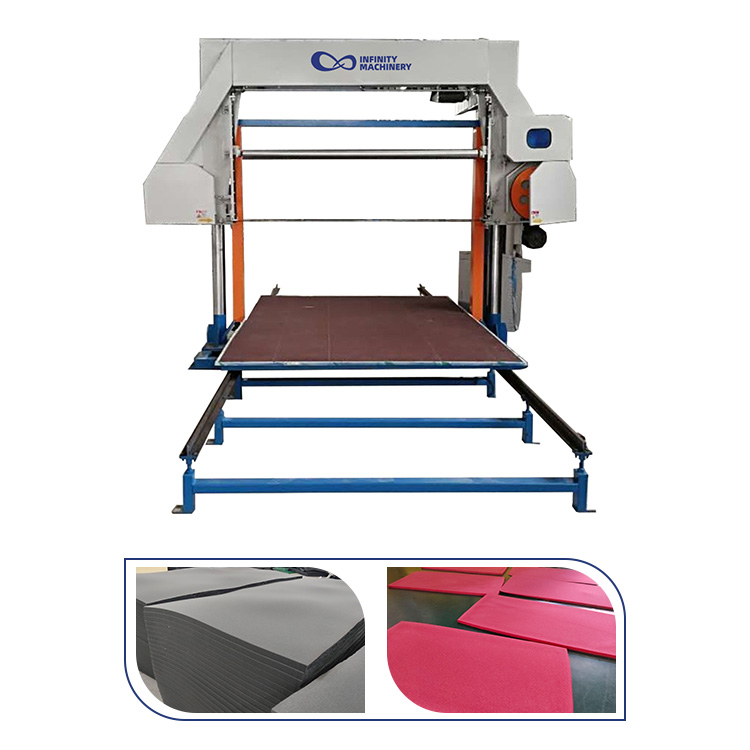
Fully automatic horizontal slicer with digital thickness control. Pairs with loading/unloading systems for continuous, hands-free operation.
Once you've automated loading and unloading, you need a way to move material between workstations efficiently. That's where conveyor systems come in. These are the backbone of any automated foam cutting line, connecting your cutting machines, stacking stations, and downstream processes into a continuous flow.
Conveyor systems for foam and mattress production are designed to handle the specific challenges of foam material — it's lightweight, compressible, and can be damaged by rough handling. Here's what makes a good foam conveyor system:
A foam processor in Brazil configured their line with a conveyor feeding their IF-FZQ3 Vertical Foam Cutting Machine from the storage area, then a second conveyor taking cut sheets to the packaging station. The entire line runs with one operator monitoring the system instead of three workers manually moving foam. Their reject rate dropped from 5% to 1.5% because automated handling eliminated the dents, tears, and misalignments that happen when workers carry foam by hand.
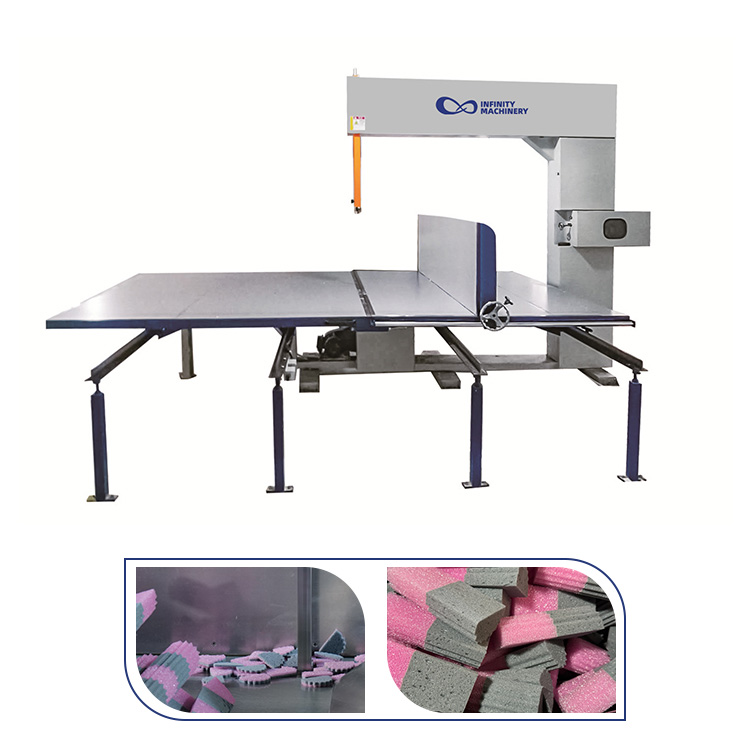
Automatic vertical sponge cutting machine with PLC touch screen and multi-thickness setting. Pairs with conveyors for continuous feed.
Here's what a complete automated foam cutting line looks like when you integrate loading systems, conveyors, and cutting machines:
This integrated approach eliminates the manual handling steps that previously consumed 80% of your cycle time. One operator at a control panel manages the entire line. The line runs at the speed of your cutting machines — not at the speed of your workers' stamina.
A mattress component factory in India implemented this exact configuration: loading table + IF-FPQ1-2150 + conveyor + IF-FZQ3 + unloading stacker. Here's what happened after 90 days:
| Metric | Before (Manual) | After (Automated) | Improvement |
|---|---|---|---|
| Blocks per shift | 22 | 50 | +127% |
| Workers needed | 4 | 1 | -75% labor |
| Material waste | 6% | 1.5% | -75% waste |
| Annual labor cost | $52,800 | $13,200 | Save $39,600/yr |
| ROI on handling equipment | $11,000 investment paid back in 3.3 months | 3.3 months | |
Setting up an automated foam cutting line with integrated material handling requires some planning. Here are the key factors to consider:
If your foam blocks are longer than the standard IF-FPQ1 table can handle (longer than 2000mm or 3000mm depending on model), consider adding the IF-LT1650/2450 Horizontal Long Track Foam Cutting Machine to your automated line. It uses a dual-rail guidance system that eliminates blade drift on extended cuts, maintaining ±1mm accuracy even on blocks up to 2450mm wide. The IF-LT1650 integrates with the same loading and conveyor systems, so you can run it alongside your IF-FPQ1 and IF-FZQ3 in the same automated workflow.
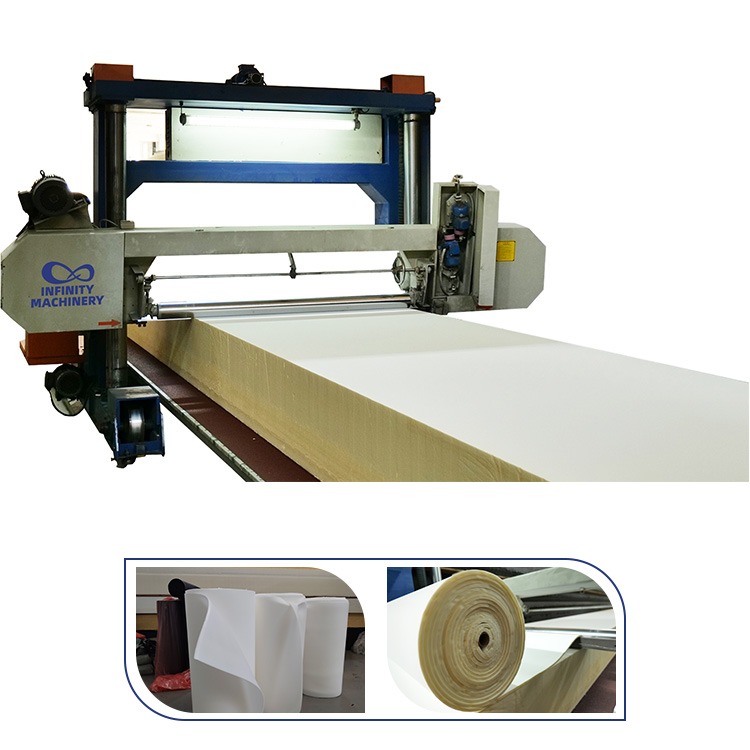
Dual-rail horizontal cutting for extra-long foam blocks. Eliminates blade drift and maintains ±1mm precision on extended cuts.
Q: "Can I add material handling to my existing cutting machines?"
A: Yes. Loading/unloading systems and conveyors are designed to integrate with both new and existing cutting machines. The IF-FPQ1 and IF-FZQ3 both have standard table heights and configurations that match our material handling equipment.
Q: "How much floor space do I need?"
A: A basic automated line with loading table + IF-FPQ1 + conveyor + IF-FZQ3 + unloading stacker needs approximately 12m x 5m. We can custom-configure the layout to fit your existing floor plan.
Q: "Do I need to buy the cutting machines and handling equipment at the same time?"
A: No. Many factories start with the cutting machine and add material handling in stages. You can buy an IF-FPQ1 today and add the loading table and conveyor six months later when you're ready to scale up. All our equipment is designed for modular expansion.
Q: "What if my production volume changes?"
A: The modular design of our conveyor systems and loading equipment means you can add or remove sections as your needs change. A line that runs 30 blocks per shift today can scale to 60+ blocks per shift with additional conveyor sections and a faster loading system.
Building a fully automated foam cutting line often means integrating additional machines beyond the core cutter pair. Here are two complementary machines to consider:
Tell us your current block volume, cutting machines, and floor layout. We'll design an automated material handling system that integrates with your existing equipment — with a payback period you can plan around.
