Here's the short version: Bonnell (open-coil) springs are still the backbone of the mattress industry in Africa, the Middle East, Latin America, and Southeast Asia — making up over 60% of mattresses sold in these markets. But many factories are producing them on machines from the 1990s that run at 30–40 springs per minute, with frequent jams and inconsistent quality. The IF-B90 coiling machine and IF-BA assembly machine together deliver 80 springs/minute with digital control. This guide shows what that means for your production math.
Walk into a mattress factory that produces Bonnell innerspring units, and you'll see a familiar rhythm. The coiling machine is spitting out double-cone springs. An operator inspects each one for defects. Another operator feeds them into the assembly machine. The whole line moves at whatever speed the slowest machine can manage.
Here's the problem we see over and over: the coiling machine is running at 30–40 springs per minute — the speed it was designed for in 1998. The assembly machine downstream has capacity for 50–60 springs per minute. The gap between them means the assembler is starved for springs 35% of the time. Operators are waiting. Electricity is still running. The factory floor has a bottleneck that nobody has calculated.
We audited a factory in Ghana last year that was in exactly this situation. They had an old mechanical coiler running at 38 springs/min. Their assembler could run at 55 springs/min, but it was only fed at 38. Their effective line speed: 38 springs/min. They were paying operators for 10-hour shifts, running the assembler at 69% utilization, and the factory owner didn't know because "that's how it's always been."
The fix was straightforward: replace the coiler with the IF-B90 (80 springs/min). Suddenly the assembler was running at full capacity. Line speed went from 38 to 55 springs/min (the assembler's limit). Output increased by 45% without adding a single operator. The coiling machine paid for itself in 5 weeks. The owner told us later: "I had been losing money for 7 years without knowing. I thought the speed was normal."
Let's break down exactly what the IF-B90 and IF-BA do, how they work together, and what the math looks like when you upgrade.
| Metric | Old Coiler (38 spm) | IF-B90 (80 spm) | Improvement |
|---|---|---|---|
| Effective line speed (springs/min) | 38 | 55* | +45% |
| Springs per 10-hr shift | 22,800 | 33,000 | +10,200 |
| Assembler utilization rate | 69% | 100% | +45% |
| Defect rate (knots, shape, temper) | 4.2% | 1.1% | -74% |
| Daily material waste (wire only) | $38 | $10 | -$28/day |
*Limited by existing IF-BA assembler capacity (55 spm). Upgrading to IF-BPL100 line unlocks full IF-B90 potential at 80 spm.
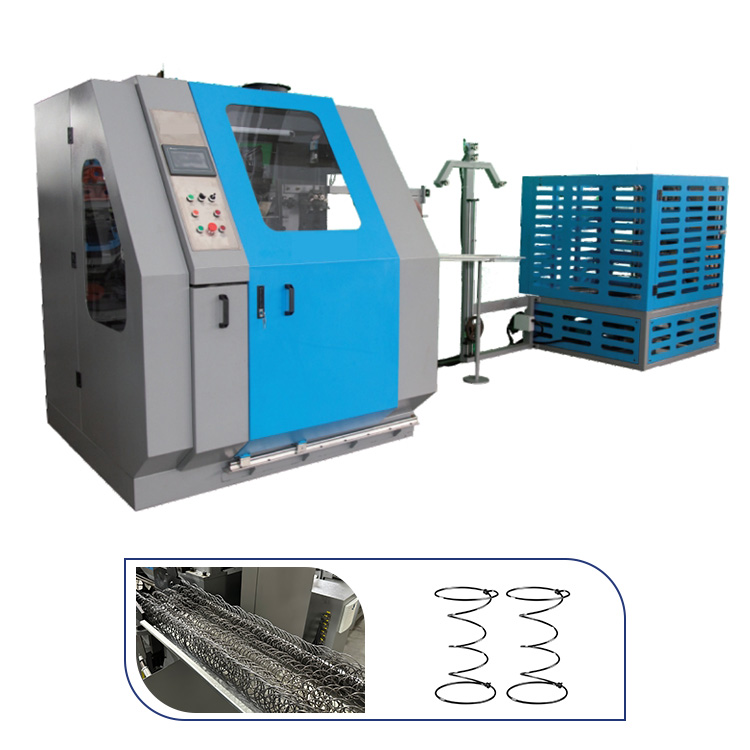
The IF-B90 is a computerized Bonnell spring coiling machine that does three things at once: it takes steel wire from the coil, forms it into a double-cone spring shape, and knots both ends — all at a rate of 80 springs per minute. It also heat-treats each spring during the cycle, so the springs come out with consistent temper and shape retention.
The key difference between the IF-B90 and older mechanical coiling machines isn't just the speed. It's the consistency and the defect rate. An old mechanical coiler uses cams and linkages that wear over time. As the machine ages, the spring dimensions drift. The knot tightness varies. The heat treatment timing gets inconsistent. The IF-B90 uses computerized servo control for all three functions — forming, knotting, and heat treatment — so every spring is identical to the last.
Why Bonnell springs still matter in 2026:
The IF-B90's computerized controls mean you can store six different spring dimension profiles — wire gauge, coil diameter, spring height, number of turns — and switch between them in under a minute. This is critical for factories that produce different mattress models (single, double, queen, king) on the same line. With an old mechanical coiler, changing spring dimensions meant changing cams and spending 45–90 minutes of downtime. With the IF-B90, it's a menu selection.
The heat treatment system on the IF-B90 is also worth understanding. Each spring passes through an induction heating coil immediately after forming. This tempers the wire to relieve internal stresses and set the spring's final shape. The computer controls the heating duration and temperature precisely. With older machines, the heating is controlled by a timer that drifts as components age, resulting in undertempered springs (weak, lose shape quickly) or overtempered springs (brittle, snap under load). The IF-B90 eliminates this variable entirely.
A mattress factory in Nigeria that switched from a 1990s mechanical coiler to the IF-B90 saw their field failure rate drop from 3.8% to 0.6% over a 6-month period. Their warranty claims — which had been running at $4,200 per month — dropped to $680. The factory owner told us: "I didn't realize how many of my returns were caused by inconsistent springs. I was blaming the foam."
For most factories, the IF-B90 alone (paired with an existing assembler) is the highest-ROI upgrade they can make. But the real gains come when you match it with the right assembly machine.
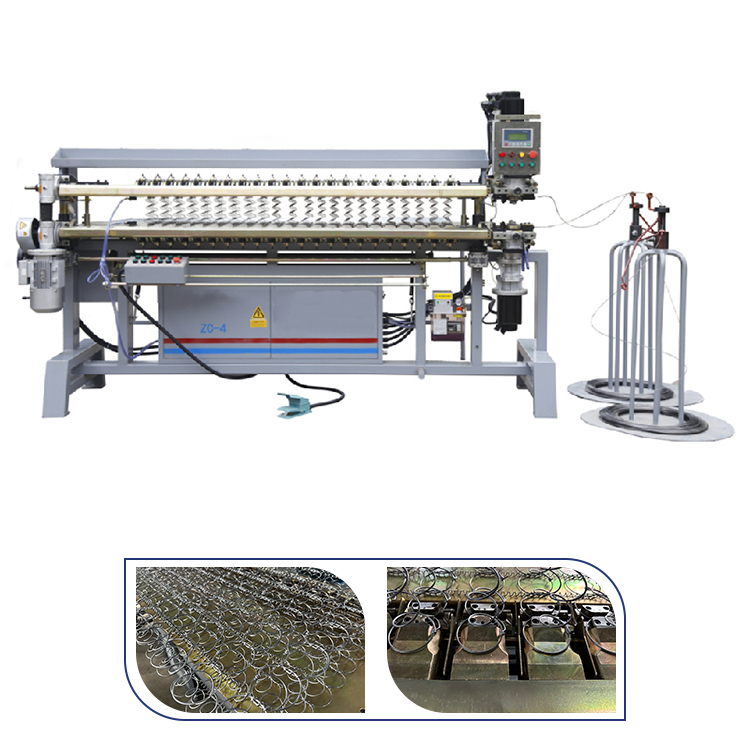
If the IF-B90 is the heart of the Bonnell line, the IF-BA automatic assembler is the skeleton. It takes the individual springs from the coiler and assembles them into the string-connected mattress innerspring unit that becomes the core of the mattress.
The IF-BA is designed for one job: to connect Bonnell springs into rows using helical wire, and to connect those rows into a completed innerspring unit. It operates at a rate of 50–60 springs per minute (depending on the mattress size and spring count). That means a standard queen-size mattress with 312 springs takes approximately 5–6 minutes to assemble.
Here's what the IF-BA does differently from older assembly machines:
A common question we hear from factory owners: "Should I buy the IF-B90 and IF-BA together, or can I just upgrade one at a time?" The answer depends on your bottleneck. If your current coiler is slow (below 40 spm) and your assembler has capacity (50+ spm), start with the IF-B90. You'll see an immediate 40–50% output increase. If your coiler is adequate but your assembler is the problem (frequent jams, high defect rate), start with the IF-BA. If both are old, buy them together — the combined payback period is typically under 4 months.
A mattress producer in Kenya took our advice and bought the pair. Eighteen weeks later, his Unit Cost Per Mattress had dropped from $14.70 to $8.90. The savings were split between wire waste reduction (down 62%), labor efficiency (one operator now does what three used to), and fewer rejected units. He sent us a photo of his new production floor with the caption: "I should have done this 5 years ago."
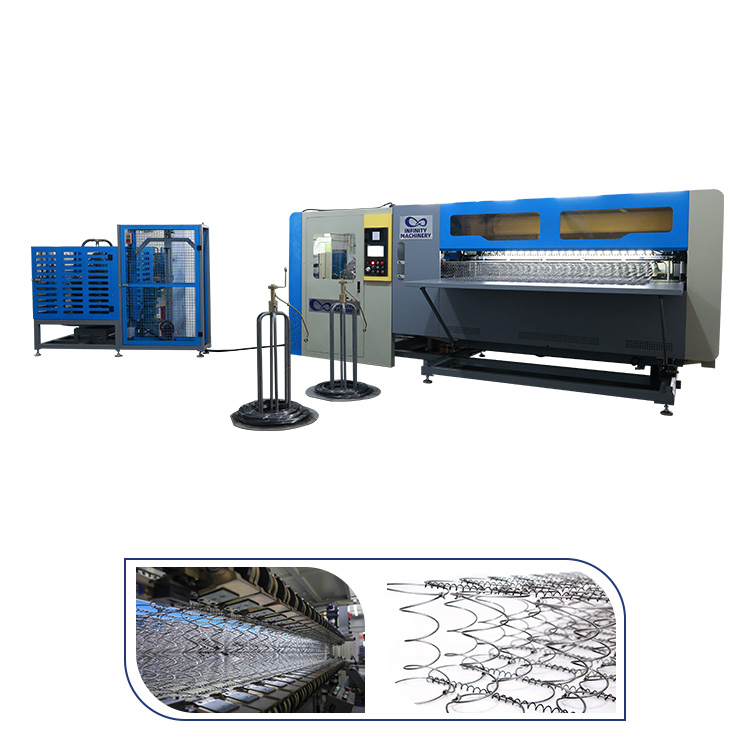
If your production volume justifies it — say, 500+ innerspring units per month — there's a third option that integrates everything into a single automated line: the IF-BPL100 automatic high-speed Bonnell spring units production line.
The IF-BPL100 takes steel wire as input and delivers finished innerspring units as output. There's no manual transfer of springs between the coiler and assembler. No intermediate inspection station. The line automatically coils the springs, inspects them for defects, rejects bad springs, aligns them, assembles them into rows, and connects the rows into the finished unit — all at a continuous speed of 80 springs per minute.
The IF-BPL100 is the solution for factories that have outgrown the "separate machines" approach. When you have separate IF-B90 and IF-BA machines, you need an operator to transfer springs between them, a buffer area for spring storage, and quality checks at both stations. The integrated line eliminates these — one operator monitors the entire line, and the defect rate drops further because there's no manual handling that could damage the springs between stations.
The IF-BPL100 represents roughly a 2.5x investment over buying the IF-B90 and IF-BA separately. But for high-volume factories, the labor savings alone (2 operators vs 4) pay back the premium within 8–10 months. The decision depends on your volume: under 300 units per month, the separate machines are more capital-efficient. At 500+ units per month, the integrated line becomes the better investment.
Here's a side-by-side comparison of three production setups we've seen in the field. Find the one closest to your current situation:
| Configuration | Old Coiler + IF-BA | IF-B90 + IF-BA | IF-BPL100 Line |
|---|---|---|---|
| Line speed | 38 spm | 55 spm** | 80 spm |
| Units per 10hr shift* | 73 | 105 | 153 |
| Operators per shift | 3 | 2 | 2 |
| Defect rate | 4.2% | 1.1% | 0.7% |
| Wire waste (per unit) | $0.47 | $0.18 | $0.12 |
| Estimated investment | — | $$ | $$$ |
| Payback vs old setup | — | 4–7 months | 8–12 months |
*Based on queen-size units (312 springs each), 80% line efficiency. **Limited by IF-BA assembler capacity.
Run through these five questions. If you answer "no" to any of them, there's money being left on the table:
Most factories find at least two "no" answers when they run this audit honestly. The IF-B90 addresses the coiling bottleneck and defect rate issues simultaneously. The IF-BA addresses the assembly bottleneck. Together, they eliminate every red flag on this list.
Send us your current spring output, wire gauge, and defect rate. We'll send back a detailed 3-page analysis of exactly where your line is bottlenecked and which upgrade pays back fastest — free, 24-hour turnaround.