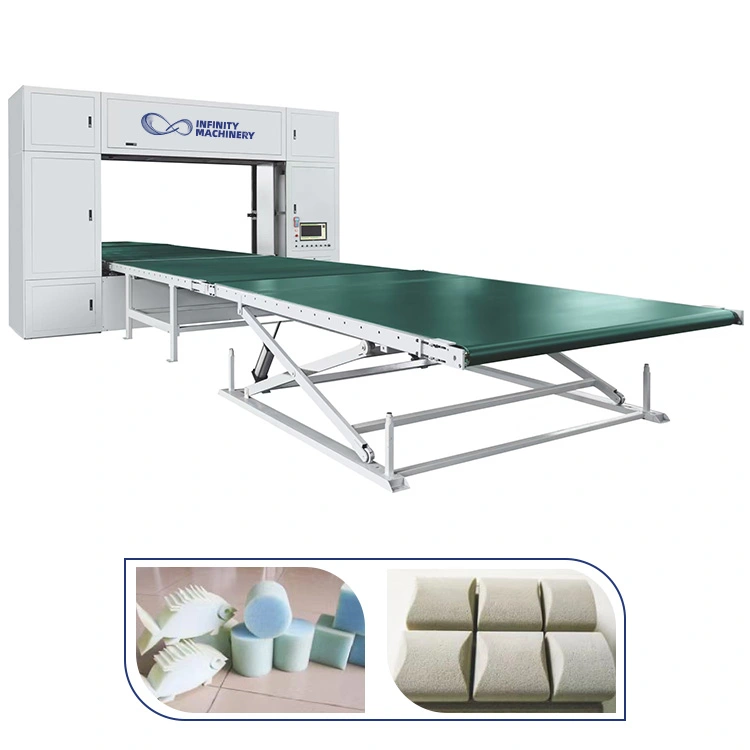
You walk through your cutting department. Three machines lined up. One for vertical cuts. One for horizontal slices. One for contour shapes. Three operators. Three maintenance schedules. Three sets of blades to replace. And between each machine, foam blocks sitting idle, waiting to be moved. One factory in Mexico had this exact setup. They were cutting 200 blocks a day with 4 people. They replaced all three machines with one. Same output. Two people. This is how they did it.
Let me guess. Your cutting line looks like this:
Then you've got blade changes. Each machine uses a different blade. You stock three types. Each wears out at a different rate. Your maintenance guy spends half his shift just switching blades and adjusting tension.
A mattress factory in Mexico — 120 employees, producing about 8,000 mattresses a year — had this exact problem. Their cutting line had three separate machines. The owner thought he was efficient because all three ran at once. He'd seen our IF-FPQ1 Horizontal Foam Cutting Machine at a trade show and started asking questions. But when he actually timed the workflow, here's what he found: 60% of the foam block's time on the cutting floor was spent waiting between machines. Not being cut. Waiting.
That's not a cutting line. That's a parking lot.
The IF-CNCVH Double Blade CNC Foam Cutting Machine does what three separate machines do — in one frame. It has two cutting blades: one vertical, one horizontal. Both are controlled by the same PC system. You load a foam block once. The machine cuts it vertically. Then it cuts it horizontally. Same block, same setup, same program.
Here's what that means in real terms:
The Mexico factory replaced their three-machine setup with one IF-CNCVH. Their cutting time per block dropped from 18 minutes to 11 minutes. Their reject rate dropped from 6% to 1.2%. They redeployed two operators to other parts of the factory — one to the foaming line, one to packing. The production manager told us: "I was running three machines and getting the output of one. Now I run one machine and get the output of three."
Not every factory needs both blades. Some factories only slice foam horizontally — into sheets for mattresses, toppers, packaging. If that's you, a double-blade machine might be overkill. You don't need the vertical blade. You need a horizontal machine that does one thing and does it perfectly.
The IF-CNCH Horizontal Blade CNC Foam Cutting Machine is built for this. Unlike standard horizontal cutters like the IF-LT Long Track Foam Cutting Machine, the IF-CNCH adds full CNC control for pattern cutting on top of high-volume sheet slicing. It's the same PC-controlled system as the IF-CNCVH, but with a single horizontal blade optimized for high-volume sheet cutting. The X, Y, C axis controls are still there — you can cut complex patterns, not just straight slices — but the machine is built around horizontal cutting as its primary function.
What makes the IF-CNCH different from a standard horizontal cutter?
The Mexico factory actually started with the IF-CNCH. They were only doing horizontal slicing for mattress sheets. Six months later, they added the IF-CNCVH for contour work. But here's the thing — they kept the IF-CNCH running alongside it because the volume justified both machines. The IF-CNCH handles the high-volume sheet cutting. The IF-CNCVH handles the complex 3D profiles. Together, they process 300+ blocks per shift with just 3 operators total.
Here's what the Mexico factory's numbers looked like 6 months after switching to the IF-CNCVH + IF-CNCH setup:
| Metric | Before (3 Machines) | After (IF-CNCVH + IF-CNCH) |
|---|---|---|
| Machines on the floor | 3 | 2 |
| Operators per shift | 4 | 2 |
| Blocks per shift | 180-200 | 300+ |
| Cutting reject rate | 6% | 1.2% |
| Blade changes per week | 5-6 | 1-2 |
| Blade types to stock | 3 | 1 |
| Annual blade cost | $4,200 | $1,800 |
| Annual labor cost (cutting dept) | $38,400 | $19,200 |
| Total annual savings | ~$21,600 + 50% more output |
Equipment investment: IF-CNCVH ($14,500) + IF-CNCH ($9,800) = $24,300
Payback period from labor + blade savings alone: $24,300 ÷ $21,600 = 13.5 months
That's just from labor and blades. Factor in the 50% output increase and the reject rate drop from 6% to 1.2%, and the real payback is closer to 8 months.
The Mexico factory owner told us: "I was scared of CNC. I thought it would be too complicated for my guys. But the PC interface — my operators learned it in two days. These machines are simpler to run than the old ones. And they never drift. Every block comes out the same."
The IF-CNCVH and IF-CNCH handle straight cuts and simple contours. But if you're cutting complex 3D profiles — mattress corner shapes, custom foam inserts, curved furniture cushions — there's one more machine worth looking at.
The IF-CNCV CNC Contour Sponge Cutting Machine uses a vertical knife with servo drive and high-precision guide rails to cut complex shapes from foam sheets. No templates. No manual tracing. The PC system reads a CAD file and cuts the shape directly. It's the machine you add when your customers start asking for custom foam shapes — mattress toppers with ergonomic contours, packaging inserts with tight tolerances, furniture cushions with curved profiles.
The Mexico factory bought an IF-CNCV after their first year with the IF-CNCVH and IF-CNCH. Here's why: they were getting requests for custom foam shapes from hotels and furniture manufacturers. Their double-blade and horizontal machines could handle 90% of the work, but the complex 3D shapes were taking too long to program and cut on the standard systems. The IF-CNCV, with its dedicated vertical knife and servo drive, cut complex shapes 3x faster than their other machines. It paid for itself in 5 months on custom work alone.
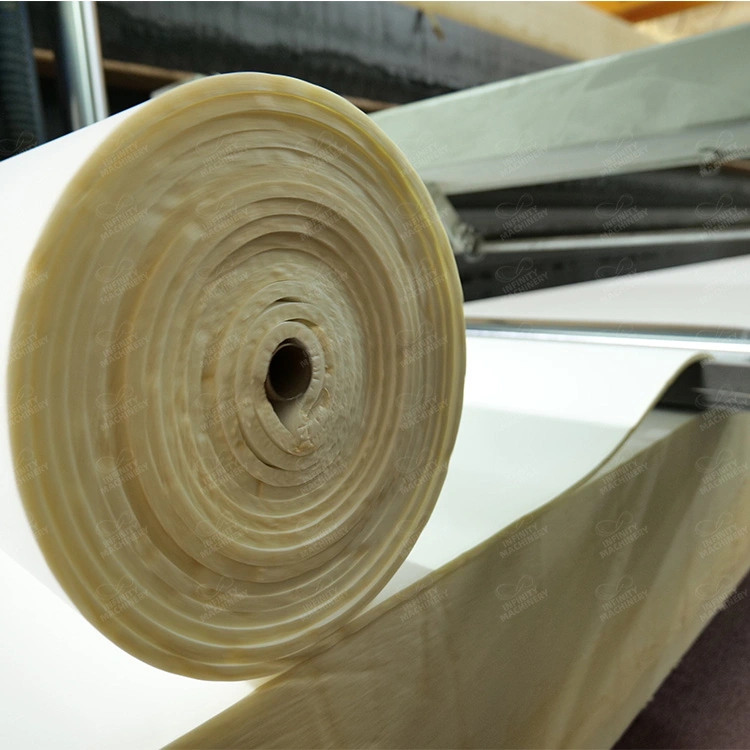
Type: Vertical knife contour cutter | Drive: Servo + precision guide rails | Cutting: Complex 3D shapes from sheets
The vertical CNC contour machine for complex 3D profiles. Reads CAD files directly, cuts without templates. Low-noise continuous blade. Optional automatic pressure roller system. The perfect third machine for factories doing custom foam work. Cuts complex shapes 3x faster than standard systems. The Mexico factory paid it off in 5 months on custom orders alone.
Not every factory needs all three. Here's a simple way to figure out what you actually need:
You need the IF-CNCH if:
You need the IF-CNCVH if:
You need the IF-CNCV if:
Here's what the Mexico factory learned — and what every foam factory should know:
The Mexico factory owner's final words to us — and they're now looking at adding the IF-APL Mattress Automatic Production Line to automate material flow between their cutters —: "I wish someone had shown me the math five years ago. I spent $60,000 on three machines that did what one $14,500 machine does. Don't make my mistake."
If you're looking for a complete foaming solution to feed these cutters, check out the IF-FF4 Horizontal Continuous Foaming Plant — it produces consistent foam blocks at densities from 4 to 180 kg/m³ that feed perfectly into any of these cutting machines.
Tell us your monthly block volume, current setup, and what you're cutting. We'll tell you exactly which machine(s) you need and what the ROI looks like. Free, no obligation, 24-hour response.