Here's a scenario almost every mattress factory has experienced: your new quilting machine runs beautifully at 15 meters per minute — churning out perfectly quilted fabric panels faster than you've ever produced before. But then the fabric stacks up at the cutting station. One operator with a manual cutter can only process about 4–5 meters per minute, and every panel needs precise trimming before it goes to the sewing line. The quilting machine sits idle 40% of the time, waiting for the cutter to catch up.
You didn't have a quilting bottleneck. You spent good money on a fast quilting machine. Now you have a cutting bottleneck — and it's costing you in idle machine time, overtime labor, and delayed production schedules.
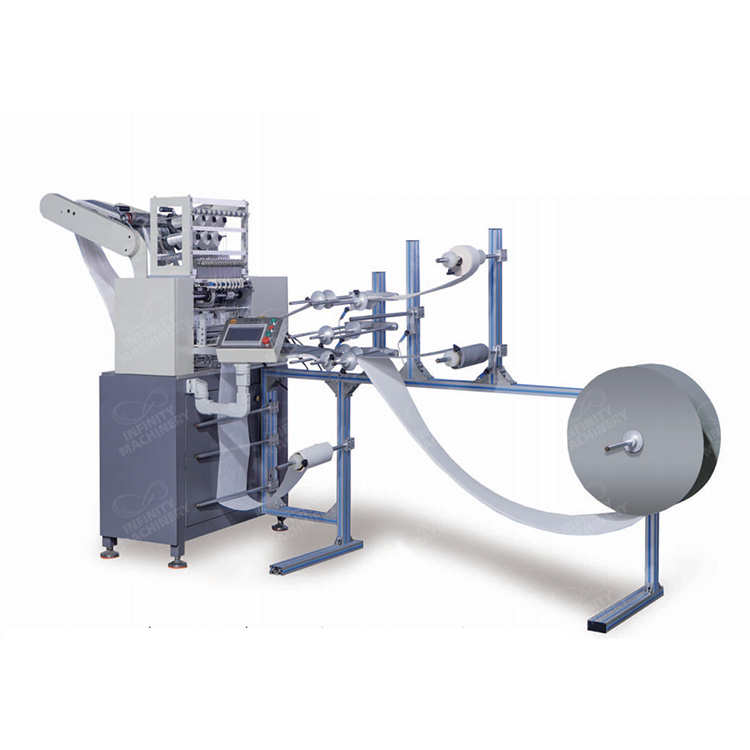
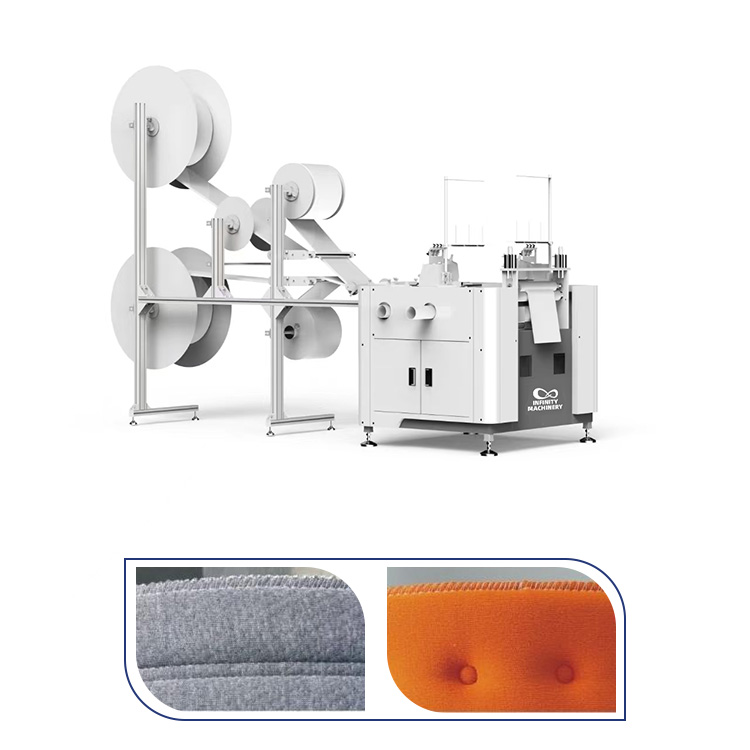
The fix isn't another quilting machine. It's matching your cutting speed to your quilting speed. The IF-QC-1 Computerized Panel Cutter Machine crosscuts, slits, and edge-trims quilted fabric at high speed — keeping pace with multi-needle quilting machines. The IF-SZX1 Linear Machine handles long-strip cutting and straight-line slitting for border fabric and continuous rolls. Together, they eliminate the cutting bottleneck and let your quilting line run at full speed.
Manual fabric cutting has costs beyond the labor line item. Here's what the spreadsheet doesn't show you:
When you add these hidden costs to the direct labor cost, manual cutting typically runs $35,000–$50,000 per year more than automated cutting for a mid-size mattress factory. The IF-QC-1 pays for itself inside the first year — just from material and labor savings, not counting the increased quilting machine utilization.
Suppose your quilting machine runs at 12 m/min producing quilted fabric panels for 8 hours per shift. In theory, that's 5,760 meters of quilted fabric per shift. But your cutting station — using a manual cutter — processes at 4 m/min. That means the cutting station can handle at most 1,920 meters per shift. The quilting machine runs for 1,920 meters' worth of production (about 2.7 hours) and then sits idle for the remaining 5.3 hours while the cutter catches up.
That's not a $15,000 quilting machine problem. That's a $40,000+ quilting machine running at 33% utilization because the cutting station can't keep up.
| Metric | Manual Cutting | IF-QC-1 + IF-SZX1 |
|---|---|---|
| Cutting speed | 4–5 m/min | 12–15 m/min |
| Operators needed | 2–3 | 1 |
| Quilting machine utilization | 33% | 90%+ |
| Panel consistency | ±5mm variation | ±1mm machine precision |
| Annual labor cost (cutting) | $54,000–$81,000 | $27,000 |

The IF-QC-1 Computerized Panel Cutter Machine is designed for one job: cutting quilted fabric panels fast and accurately. It crosscuts, slits, and edge-trims in a single pass — eliminating the need for separate trimming stations. It works in tandem with quilting machines, matching their output speed so there's no backlog. Precision is computer-controlled, so every panel comes out identical: same width, same edge trim, same corner angle.
The IF-QC-1 is also remarkably versatile. It handles different fabric thicknesses — from thin polyester quilting to thick multi-layer panels — without manual adjustment. The computerized control stores cutting programs for different mattress sizes, so switching from a twin to a king panel takes seconds. For factories running multiple mattress models on the same line, this programmability alone can save 30–60 minutes of changeover time per day.
Another advantage: the IF-QC-1's edge-trimming function removes the need for a separate fabric trimming station. In manual cutting lines, the operator roughly cuts each panel and then it goes to a trimming station for final dimensions. The IF-QC-1 combines these steps — cutting and trimming in one pass — eliminating the handling time between stations and reducing the required floor space by roughly 30%.
While the IF-QC-1 handles panel crosscutting and slitting, the IF-SZX1 Linear Machine specializes in straight-line cutting of border fabric, continuous strips, and long runs of matching material. It's designed for factories that need to produce consistent-width fabric strips for mattress borders, edge tapes, and other linear cuts. The IF-SZX1 runs at high speed with precise width control, making it the perfect partner for the IF-QC-1 — one handles panels, the other handles strips.
In a typical finishing line layout, quilted fabric comes off the quilting machine, goes through the IF-QC-1 for panel cutting, while border fabric runs through the IF-SZX1 for strip cutting. Both then feed into the sewing and flanging stations. This parallel workflow means the cutting station never becomes a bottleneck — even during peak production.
"We bought a new multi-needle quilting machine and were thrilled — until we realized our cutting station couldn't keep up. The quilted fabric piled up so fast we had to run the quilting machine at half speed. The IF-QC-1 solved it immediately. Now the quilting machine runs at full speed and the cutter keeps pace. We also use the IF-SZX1 for our border strips, and the whole finishing line flows without a single backup."
— Production supervisor, mattress factory, Egypt
Once panels are cut and strips are ready, the next step is sewing the mattress borders. The IF-SB-A2 Front and Back Double-heads Mattress Sewing Machine sews both sides of the mattress simultaneously in a single pass — doubling sewing speed compared to single-head machines.
Before you buy another quilting machine, check whether your cutting station can keep up. The IF-QC-1 computerized panel cutter and IF-SZX1 linear machine eliminate the post-quilting bottleneck — matching cutting speed to quilting speed with computer precision. The IF-SB-A2 completes the line with double-head sewing. Together, they turn your finishing line into a continuous, high-speed flow from quilted fabric to finished mattress.
Get a free finishing line speed assessment.