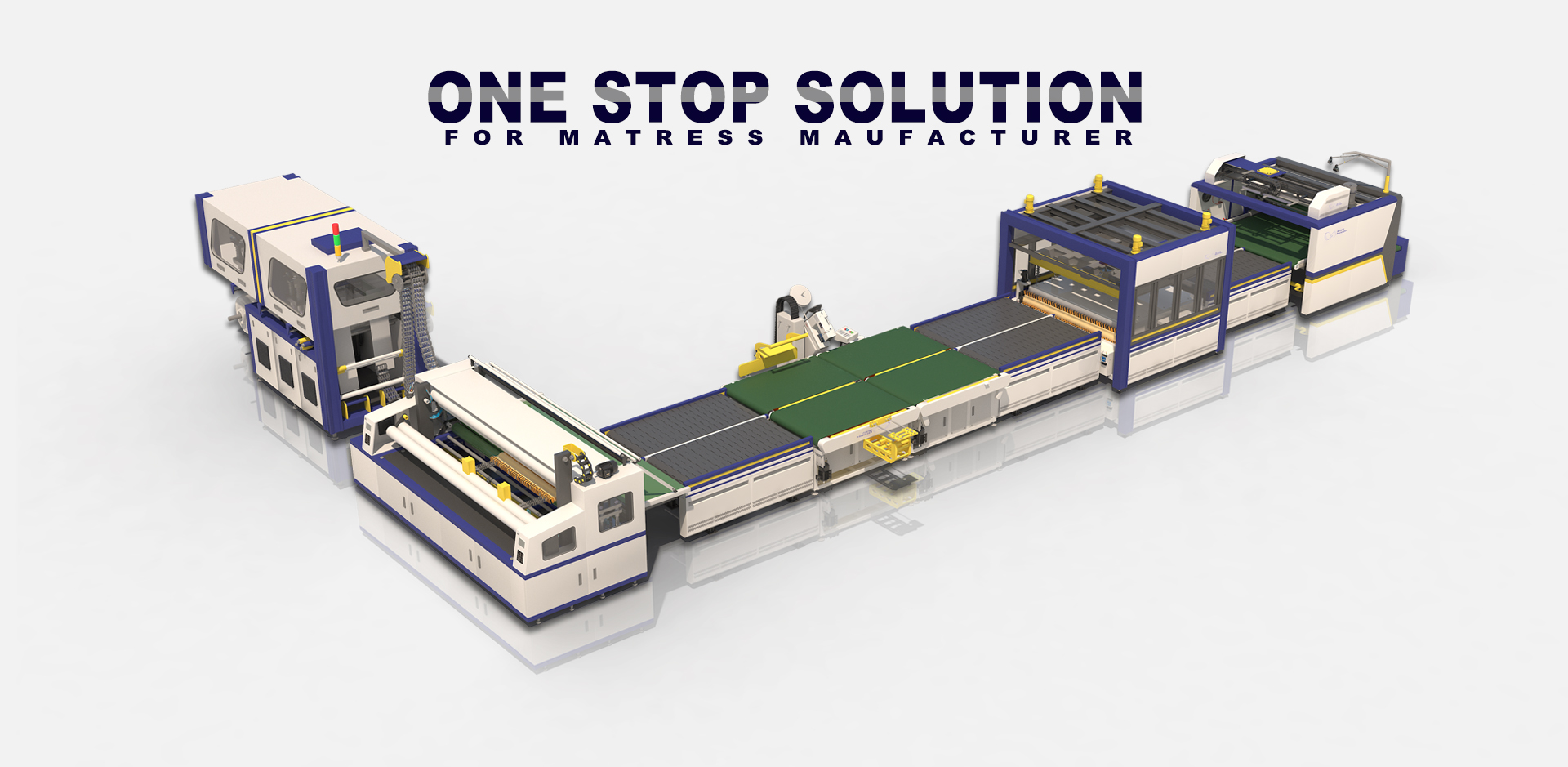
Here's the short version: Most mattress factories grow by adding machines one at a time. A foaming machine here, a cutting line there, a quilting machine, a tape edger, a packing station. Each machine comes from a different supplier, runs on a different control system, and operates at a different speed. The gaps between them — the waiting, the manual transfers, the speed mismatches — add up to $3.20 per mattress in hidden costs. The IF-APL eliminates those gaps by integrating everything into one synchronized line.
Most mattress factories start the way any manufacturing business does — with one machine. A foam cutting machine, or a quilting machine, or a tape edge machine. As orders grow, they add another machine. Then another. Each time, they buy from whatever supplier offers the best price or fastest delivery.
Ten years later, they have a factory floor full of machines from five different suppliers, running on three different control systems, with operators walking between stations carrying materials by hand because the machines don't connect to each other. And the factory owner wonders why their cost per mattress is 18% higher than the competitor who built a complete production line from day one.
The cost isn't in the machines themselves. It's in the gaps between them:
| Cost Category | Piecemeal Machines | IF-APL Integrated Line | Savings/Mat. |
|---|---|---|---|
| Material handling labor | $1.80 | $0.40 | $1.40 |
| Speed mismatch waste | $0.95 | $0.15 | $0.80 |
| Inventory buffer carrying cost | $0.65 | $0.10 | $0.55 |
| Quality defects from handling | $0.55 | $0.10 | $0.45 |
| Total hidden cost per mattress | $3.95 | $0.75 | $3.20 |
Based on production data from 8 mattress factories, 2024–2025. Piecemeal configuration averages 4+ separate machines from different suppliers. IF-APL configuration integrates foam production through packing.
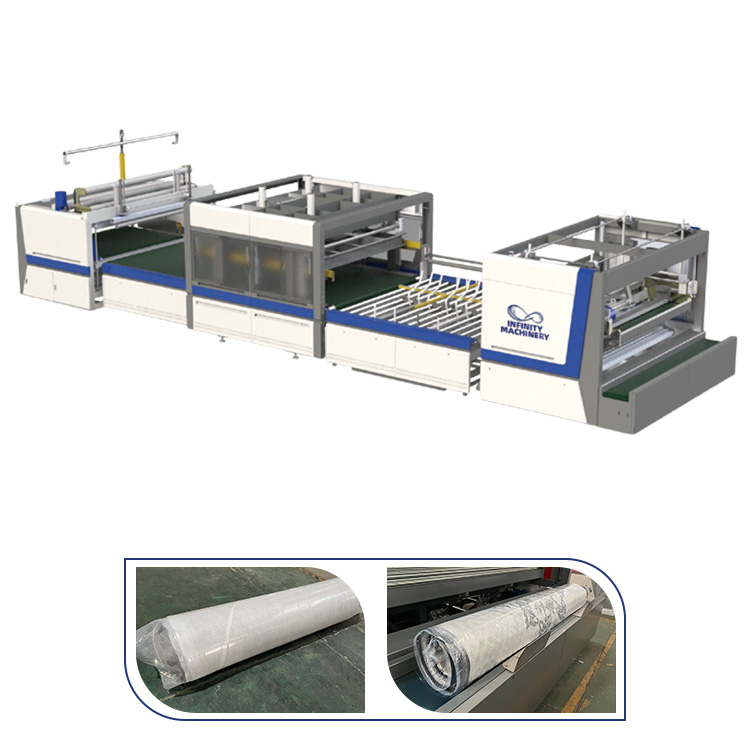
The IF-APL is a fully integrated mattress production line that covers the entire manufacturing process — from raw foam production or foam block input, through cutting, quilting, sewing, tape edging, and packing — in one synchronized system. It's not a collection of machines placed in sequence. It's a single production system where each station communicates with the next, material moves automatically between stations, and the line speed is controlled by one central PLC.
What makes the IF-APL different from buying machines separately:
A mattress manufacturer in Pakistan that transitioned from piecemeal machines to the IF-APL shared their before-and-after: their output went from 180 mattresses per day (with 14 operators across 4 separate stations) to 320 mattresses per day (with 8 operators managing the IF-APL line). Their defect rate dropped from 5.8% to 1.2%. The line paid for itself in 14 months — and the owner attributed 40% of the savings to reduced material handling alone.
The IF-APL is the right choice for any factory that's serious about scaling production. It's a significant investment — typically 3–5x the cost of buying individual machines — but the per-mattress cost reduction and the capacity increase mean the payback is typically 12–18 months for factories running 200+ mattresses per day.
For factories that produce their own foam — rather than buying pre-made blocks from a supplier — the IF-FF4 horizontal continuous foaming plant is the natural upstream partner to the IF-APL. It produces continuous foam blocks that feed directly into the cutting station of the production line.
The IF-FF4 is a horizontal continuous foaming plant that produces polyurethane foam blocks in densities from 4 to 180 kg/m³ — covering the full range from soft cushion foams to high-density structural foams. It's designed for continuous operation, producing foam blocks of consistent quality shift after shift.
When paired with the IF-APL, the IF-FF4 eliminates two major cost centers: foam block purchasing (and the supplier markup that comes with it) and foam block storage (and the warehouse space it consumes). The foam goes directly from the foaming plant into the production line — never touched by hand, never stored.
The IF-FF4 supports a wide range of applications — furniture, bedding, automotive, packaging, textiles — which means factories that produce both mattresses and other foam products can use the same foaming plant to supply multiple production lines.
The IF-FF4 is the right choice for factories that have outgrown buying pre-made foam blocks and want to capture the margin that goes to foam suppliers. For a factory producing 50+ tons of foam per month, the IF-FF4 typically pays back in 8–12 months from raw material savings alone. When integrated with the IF-APL line, the combined payback is even faster because of the handling and storage savings.
A production line isn't complete until the product is packaged and ready for shipping. The IF-CR2 automatic mattress roll packing machine is the recommended downstream partner for the IF-APL line.
Like the rest of the IF-APL, the IF-CR2 integrates directly into the line's control system. When the mattress emerges from the final finishing station, it moves onto the IF-CR2 conveyor, is compressed and rolled into a compact package, and emerges ready for palletizing — all without manual intervention.
The combination of IF-APL + IF-FF4 + IF-CR2 represents the complete mattress manufacturing solution from raw chemicals to packaged product. For factories building new production facilities from scratch, this three-machine combination is the recommended starting point. For existing factories, each machine can be added individually — but the full benefits come when all three are integrated.
Not every factory is ready to invest in a full IF-APL line from day one. Here's a practical roadmap for transitioning from piecemeal machines to an integrated production line:
| Phase | Action | Investment | Output Increase |
|---|---|---|---|
| 1: Standalone | Buy individual machines as needed | Lowest | Baseline |
| 2: Connected | Add conveyors, standardize on one control system | +20% | +15–25% |
| 3: Automated | Replace manual transfers with auto material handling | +40% | +30–50% |
| 4: Integrated | Full IF-APL line: one PLC, one supplier, one system | +100% | +80–120% |
Run this audit to find out how much your current machine configuration is costing you:
Every factory that runs this audit identifies at least $2.50 per mattress in addressable waste. The IF-APL is designed to eliminate every item on this list.
Send us your current production layout, daily output, and machine list. We'll design a customized IF-APL configuration for your factory with exact ROI projections — free, 48-hour turnaround.