Factory profile: Lahore, Pakistan. 14 operators, 4 separate machines from 3 suppliers. 180 mattresses/day, $43.20 cost per mattress. 14 months later: 8 operators, 1 integrated IF-APL line with IF-CR2 packing. 320 mattresses/day, $33.70 cost per mattress. Investment recovered in 14 months. This is how they did it.
Ahmed ran a mid-sized mattress factory on the outskirts of Lahore. He'd built it over 12 years, adding a machine whenever he could afford one. By 2024, his production floor had four machines from three different suppliers: a foam cutting line, a quilting machine, a tape edge machine, and a manual packing station. Each machine had its own operator, its own maintenance schedule, and its own speed.
The numbers Ahmed was facing:
Ahmed knew he had a problem. He just didn't know how big it was until he did a full production audit. His foam cutting line could process 12 blocks per shift. His quilting machine could handle 8 blocks worth of quilted fabric. His tape edge station was slower than both. The bottleneck shifted between stations depending on the day, which meant inventory buffers built up between every machine — stacks of semi-finished product waiting for the next station.
"I thought the solution was to add more machines," Ahmed said. "My instinct was to buy a second quilting machine. But when I calculated the actual utilization of my existing equipment, I found my quilting machine was running at 37% — it was idle most of the time while the operator handled material between stations. Adding another machine would have doubled the problem."
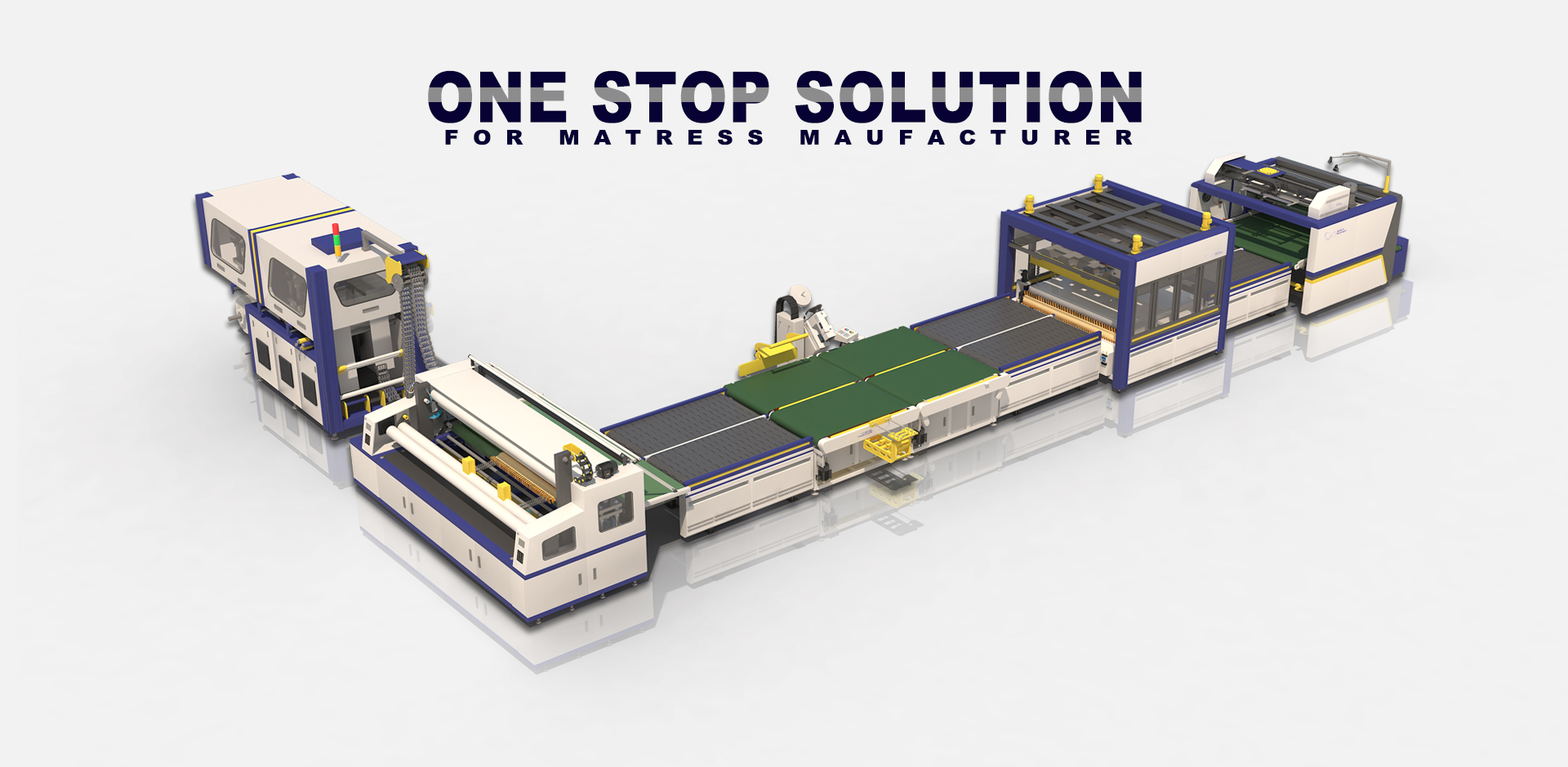
Instead of buying individual machines, Ahmed decided to replace his entire production floor with an integrated solution. He chose the IF-APL mattress automatic production line and the IF-CR2 automatic roll packing machine from Infinity Foam Machinery.
| Metric | Before (4 Machines) | After (IF-APL + IF-CR2) | Change |
|---|---|---|---|
| Daily output | 180 | 320 | +78% |
| Operators | 16 | 8 | -50% |
| Defect rate | 5.8% | 1.2% | -79% |
| Return rate | 4.2% | 0.8% | -81% |
| Cost per mattress | $43.20 | $33.70 | -22% |
| Monthly savings | — | — | $44,460 |
Production data from Ahmed's factory, Lahore, Pakistan. 26-day months, queen-size mattresses.
Ahmed's decision to go with the IF-APL was driven by three factors that he identified during his audit:
1. Speed synchronization. His four machines each ran at different speeds. The foam cutter was fast. The quilting machine was medium. The tape edge station was slow. The packing station depended on the operator's speed. The IF-APL's single PLC controls all stations at a synchronized speed — if one station slows down, they all slow down together. No more buffer stacks building up between stations.
2. Automatic material handling. Ahmed's factory had two workers whose primary job was moving material between stations. Foam blocks from the cutter to the quilting station. Quilted fabric to the sewing station. Mattresses to the packing area. The IF-APL integrates conveyors that move material automatically between stations. Those two material handlers were redeployed to production roles.
3. Single supplier responsibility. When a machine broke down, Ahmed had to call the supplier — who blamed the upstream machine, or the material, or the operator. With the IF-APL, there's one supplier for the entire line. If something goes wrong, one call fixes it.
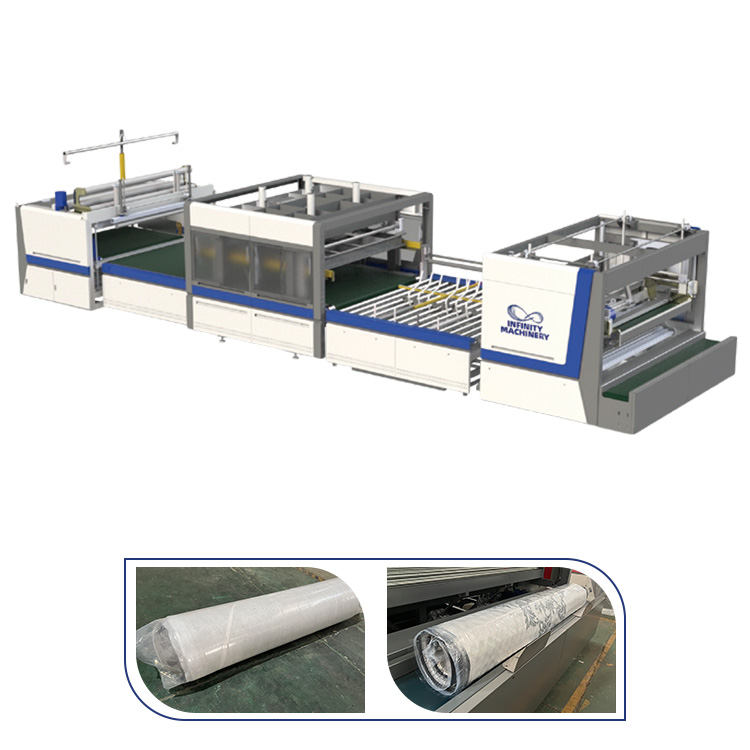
The IF-CR2 was added as the final station. Before, Ahmed's factory packed mattresses by hand with shrink wrap — a process that took 4 minutes per mattress and resulted in damaged products (6.5% damage rate). The IF-CR2 compresses, rolls, and seals each mattress in 30 seconds. The damage rate dropped to 0.8%. And because compressed mattresses take 70% less shipping space, Ahmed was able to reduce his freight costs by 58%.
Before adding the IF-CR2, Ahmed was shipping mattresses uncompressed. A 40-foot container held 28 queen mattresses. His average freight cost per mattress was $24. After installing the IF-CR2, the same container held 195 compressed and rolled mattresses. His freight cost dropped to $7 per mattress.
"The packing machine paid for itself in shipping savings alone," Ahmed said. "The production line improvements were about efficiency. The packing machine was about changing the entire cost structure of our logistics." He now exports 40% of his production to Middle Eastern and African markets — business that was unprofitable before compression rolling because the shipping costs ate his margin.
The IF-CR2 also freed up warehouse space. Ahmed's finished mattress inventory used to occupy 3,000 square feet. After compression rolling, the same inventory fits in 800 square feet. He converted the freed space into a second production shift, further increasing output without expanding his building.
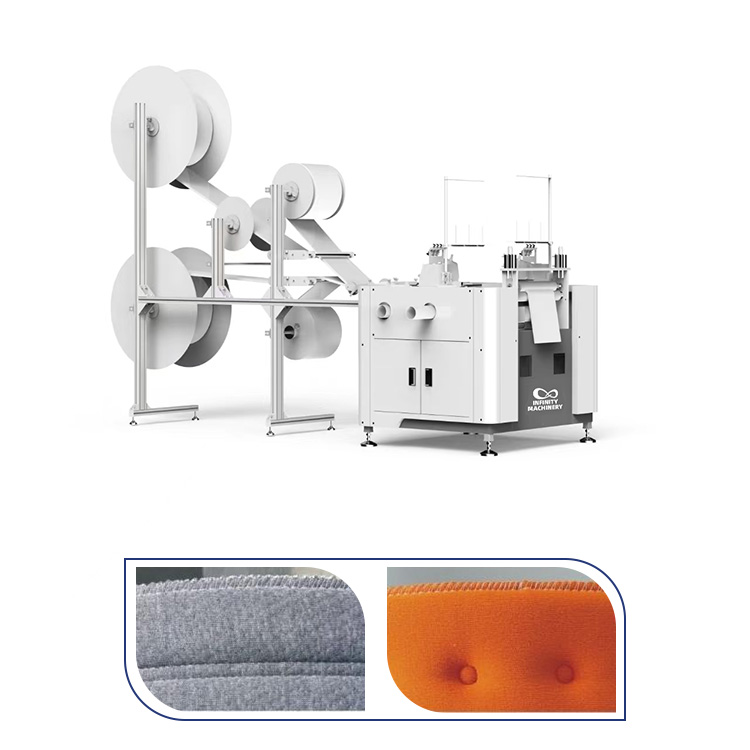
The third machine in Ahmed's new lineup was the IF-SB-A2 double-heads sewing machine. Before, his sewing station used a single-head industrial machine that produced mismatched front-and-back border stitching — one of his top return reasons. The IF-SB-A2's dual synchronized heads eliminated this completely.
"The reduction in customer returns was the biggest surprise," Ahmed said. "I knew the sewing quality was inconsistent, but I didn't realize how much it was costing me in returns. After installing the IF-SB-A2, our border-related returns dropped by 82%. That alone saved us $2,800 per month."
The IF-SB-A2 integrates with the IF-APL line's conveyor system. Quilted panels from the quilting station move directly to the IF-SB-A2 without manual handling. The operator focuses on guiding the mattress through the machine, not on moving materials.
Ahmed's recommendation to other factory owners considering the same transition: "Don't calculate the payback based on output increase alone. The real savings are in the things you're not measuring — the material handling labor, the inventory buffers, the return rate, the freight costs. Those add up to more than the machine itself."
Here's Ahmed's final ROI calculation:
Payback: 14 months (including installation and training).
"The fastest payback came from the things I wasn't measuring before," Ahmed said. "I was looking at machine speed. I should have been looking at machine utilization, material handling, and shipping costs. Those were the real opportunities."
Ahmed's factory now runs two shifts on the IF-APL line, producing 640 mattresses per day. He's planning to add a second IF-CR2 to handle the increased packing volume. His next investment: an IF-FF4 continuous foaming plant to produce his own foam and eliminate supplier markup. "The IF-APL showed me what's possible when everything works together," he said. "I'm not going back to piecemeal."
Send us your current production layout, machine list, and monthly output. We'll design a customized IF-APL configuration with exact ROI projections — based on real case study data from factories like Ahmed's. Free, 48-hour turnaround.