If you manufacture sofas, loveseats, or any upholstered furniture with spring support, here's a question that cuts straight to your bottom line: are you still forming your springs by hand?
Walk through most furniture factories and you'll see it: two or three workers at a manual forming station, bending wire, cutting it, assembling conjoined spring units piece by piece. It's slow, it's inconsistent, and — most importantly — every spring they produce is slightly different from the last. That means your left sofa cushion might have 12% more support than the right one. Your customer won't see it on day one, but after three months they'll feel that one side sags faster. And they won't blame the spring — they'll blame your brand.
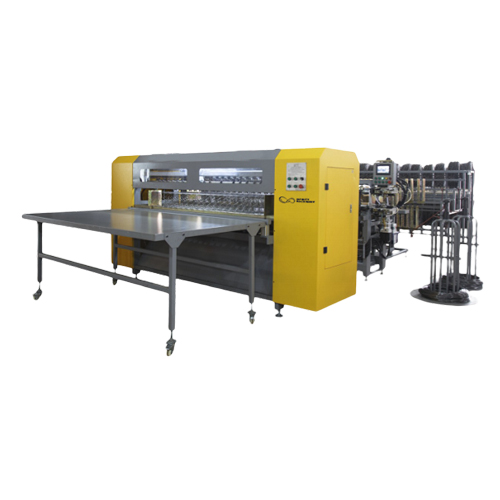
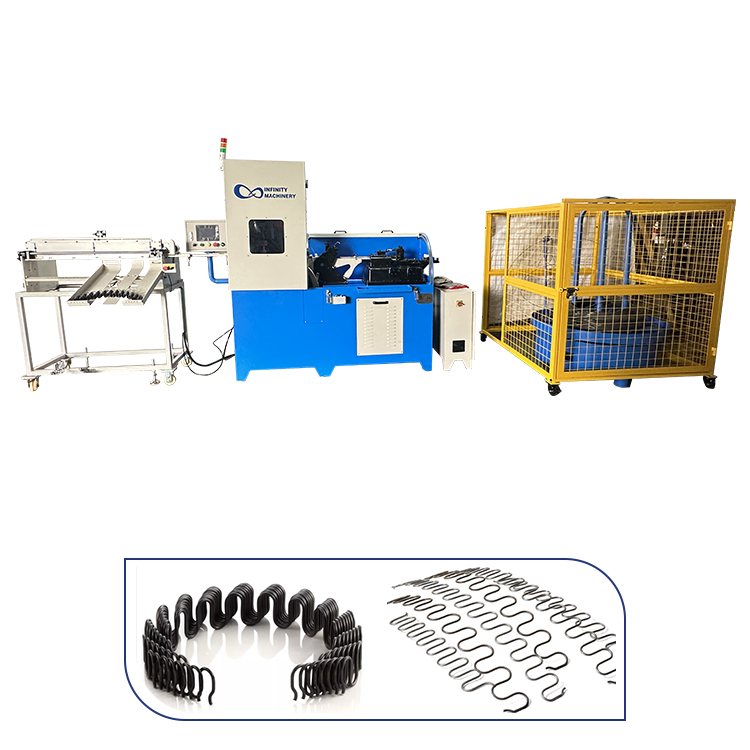
The fix is straightforward. The IF-L Wire Drawing Spring Machine produces conjoined springs for soft furniture with consistent quality — no sinking, no variation. The IF-LA Conjoined Coiling Machine takes it further with automatic superlastic coiling that guarantees maximum productivity and reliability. Together, they replace an entire manual spring department with one operator.
Let's run the numbers for a furniture factory producing 100 sofa units per day. Each sofa uses 40–60 conjoined springs depending on the design. That's 4,000 to 6,000 springs per day that need to be formed, cut, and assembled into units.
With manual forming, a skilled worker produces about 150–200 springs per hour. To hit 5,000 springs per day, you need 3–4 workers on spring forming alone — not counting assembly. At $9–12 per hour per worker (typical furniture manufacturing labor in most markets), that's $90,000 to $120,000 per year just in spring-forming labor.
And that's before you account for inconsistency. Hand-formed springs have measurable variation in wire tension, coil diameter, and height. In testing, we've seen up to 12% variation in support force between springs made by the same worker on the same day. That translates directly into cushions that wear unevenly and customers who notice.
| Factor | Hand Forming | IF-L / IF-LA |
|---|---|---|
| Springs per hour per worker | 150–200 | 500–800 (machine) |
| Workers needed for 5,000/day | 3–4 | 1 |
| Annual labor cost | $90K–$120K | $30K–$40K |
| Spring consistency | ±12% variation | ±1% machine precision |
| Sinking / sagging complaints | Common | Near zero |
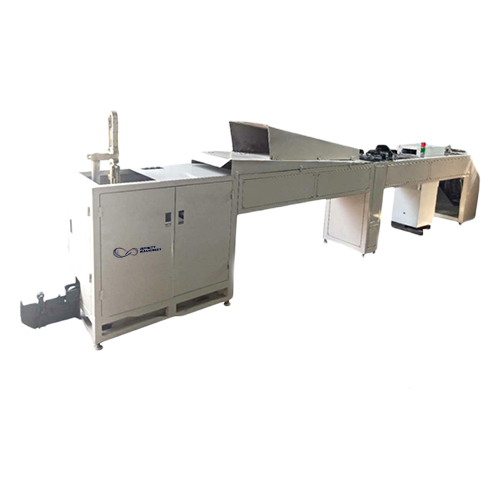
The IF-L Wire Drawing Spring Machine is purpose-built for manufacturing conjoined springs for all types of upholstered furniture. Unlike universal wire formers that need frequent changeovers, the IF-L is optimized for the conjoined (or "linked") spring geometry that sofas, loveseats, and chair seats rely on.
The IF-L isn't just about speed — it's about consistency. Every conjoined spring unit coming off the machine has identical tension, identical coil spacing, and identical height. Your cushions will feel the same on the left and the right. Your customers won't develop a "favorite side" because of sagging — they'll just enjoy the furniture.
If your production volume demands even more, the IF-LA Conjoined Coiling Machine is the next step. It produces superlastic spring units with higher speed and full automation. "Superlastic" refers to a spring design that provides maximum elasticity per unit of wire — you get more support with less material. The IF-LA is built to the highest manufacturing standards, with reliability as the core design principle.
The key difference between the IF-L and the IF-LA is automation level and output speed. The IF-L is a highly capable machine for daily production, running with one operator. The IF-LA is designed for factories where spring production needs to keep pace with high-volume furniture assembly lines — it coils faster, runs longer between maintenance intervals, and integrates more easily into automated material handling systems.
"We had three guys forming conjoined springs by hand. Every batch was slightly different. We started getting complaints from a retail customer that some sofas felt 'softer on the left side.' We bought the IF-L and within a week we saw the difference — every spring unit was identical. Within a month we reassigned two workers to upholstery (where we needed them more) and kept one operator on the IF-L. Our spring cost dropped by about 40% and the consistency complaints disappeared completely."
— Production manager, upholstered furniture factory, Vietnam
| Factor | IF-L | IF-LA |
|---|---|---|
| Best for daily volume | 60–150 sofa units | 150+ sofa units |
| Automation level | Machine-assisted, 1 operator | Fully automatic coiling |
| Spring type | Standard conjoined | Superlastic (higher elasticity) |
| Material efficiency | Good — better than hand forming | Excellent — superlastic uses less wire per spring |
If you also produce sofas, chairs, or seat cushions that use zigzag (sinusoidal) springs — a common complement to conjoined springs — the IF-Z2-PGY High Speed Sofa Zig-zag Spring Forming Machine is a natural addition. It produces S-shaped zigzag springs at 300–800 pieces per minute with simple operation and lower noise. When you run the IF-L or IF-LA for conjoined springs and the IF-Z2-PGY for zigzag springs, you cover the full range of furniture spring types with just two machines and two operators — instead of a whole manual department.
Hand-formed conjoined springs have hidden costs that go beyond labor: inconsistency, material waste, and quality complaints that damage your brand. The IF-L delivers precision conjoined springs with one operator and zero variation. The IF-LA takes it further with automatic superlastic coiling for higher volumes. Together with the IF-Z2-PGY for zigzag springs, they give you a complete furniture spring department that runs on machines — not on skilled labor that's increasingly hard to find and keep.
Contact Infinity Foam Machinery today to discuss your furniture spring production needs.
Get a free production analysis and machine recommendation.